
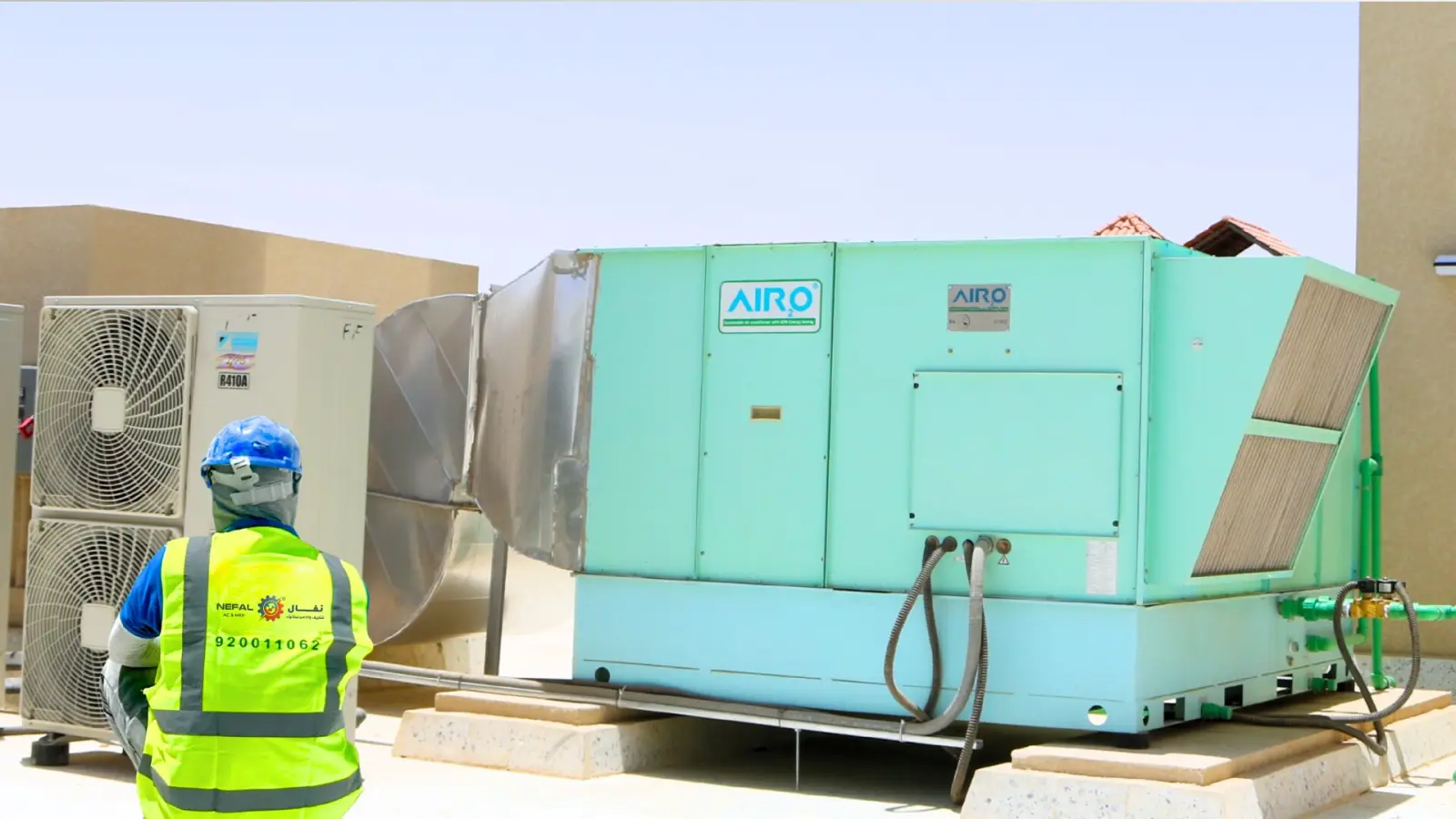
Evaporative Desert Cooling
Cooling and air renewal solutions for industrial and commercial spaces, suited to dry climates and varied operating needs.
What We Deliver: Evaporative Desert Cooling
Evaporative (desert) cooling systems lower air temperature by evaporating water. Options include direct, indirect and multi-stage evaporative configurations, depending on the unit type and project requirements.
At Nefal, we provide complete solutions that begin with a study of site conditions and cooling and ventilation needs. Our scope covers design, supply, installation, air distribution networks, water piping and controls, through to testing, commissioning and airflow adjustment.
Scope of Work:
- Study site conditions and determine the airflow quantities and the appropriate system type.
- Supply and install evaporative (desert) cooling units.
- Install air ducts, insulation and distribution outlets as per the design.
- Install water supply and drainage piping and accessories.
- Install air filters and water equipment in line with unit specifications.
- Carry out electrical connections and controls.
- Coordinate air outlet openings or the required discharge systems.
- Test operation, adjust airflow and verify performance.
Suitable Projects:
The suitability of the system is determined by the climate, heat sources, water quality, and the heat and humidity requirements inside the space.
System Features
- Economical electricity consumption: potential to reduce consumption compared with some compressor-based cooling systems where operating conditions are suitable.
- Air renewal: a continuous supply of outside air in systems designed for this purpose.
- Large-area coverage: multiple options for airflow volumes and distribution methods.
- Range of solutions: direct, indirect and multi-stage units, depending on project needs.
- Practical routine maintenance: components are easy to service when suitable access is provided and water and cleaning requirements are met.
How We Ensure Quality
- Suitable climate selection: assessment of heat, humidity and the nature of the activity before the system is specified.
- Considered air distribution: defining airflow quantities and outlet locations, with suitable routes for the air to exit.
- Installation to specification: ducting, water, drainage and electrical works carried out with attention to water quality and maintenance clearances.
- Testing and adjustment: verifying unit operation, air distribution, pumps and controls, and reviewing temperature and humidity during operation.
What We Need to Start
- Project location, space layouts and ceiling heights.
- Nature of the activity, operating hours and number of occupants.
- Heat sources and the required temperature and humidity levels.
- Locations of doors, openings and existing exhaust and discharge fans.
- Water source, water quality and electrical supply data.
- Proposed unit locations and relevant structural drawings.
We review the available information with you to determine the suitability of the system and its implementation requirements.
Featured Case Study — A Real Nefal Handover
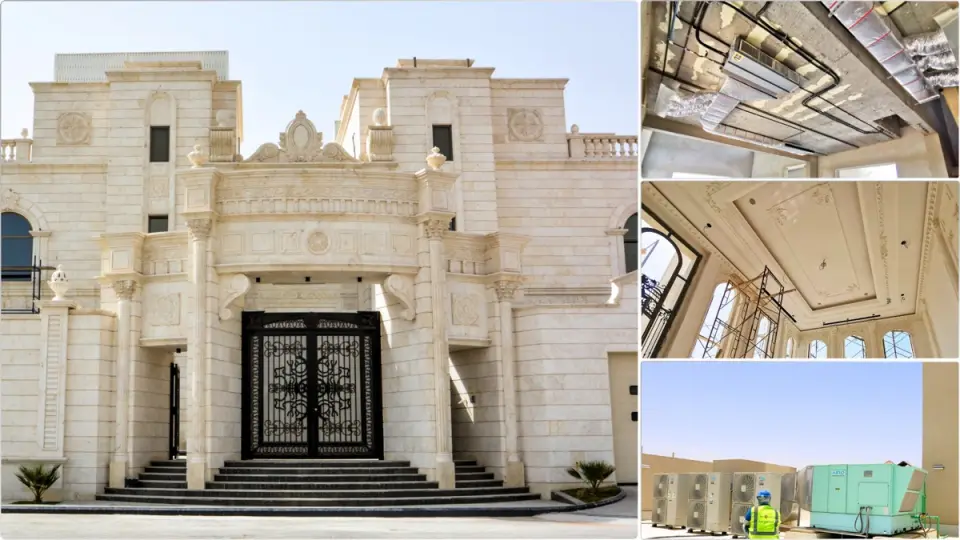
Private Villa — Riyadh
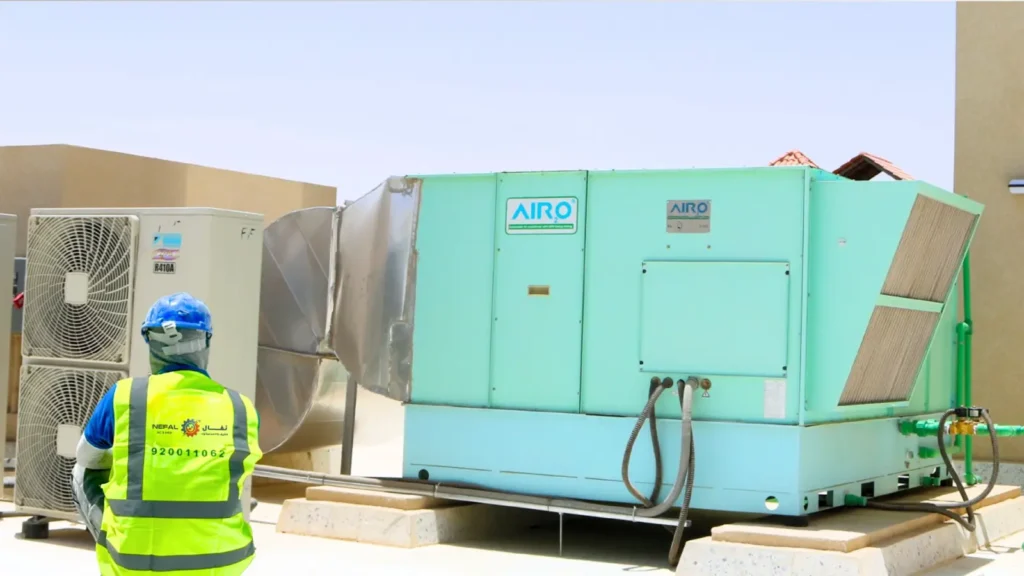
Technical Information
- Capacity
- 300+ TR
- System
- Evaporative Desert Cooling
- City
- Riyadh
- Reference Project
- Private Villa — Riyadh
- Scope
- Desert Cooling Units, Galvanized Air Ducts, Flow Registers, Water Supply Inputs
Frequently Asked Questions
What are the types of evaporative (desert) cooling?
They include direct evaporative cooling, where air passes through wetted cooling media; indirect evaporative cooling, which lowers the temperature of the supply air without adding moisture to it at that stage; and multi-stage systems that combine different cooling technologies.
Is it suitable for high-humidity areas?
Evaporative cooling becomes less effective as humidity rises, and the effect varies by system type. For this reason, site conditions are studied before a system is selected, and some alternatives may be more suitable. The difference between dry inland cities and coastal cities during periods of high humidity is also taken into account.
Can it be used in an enclosed space?
Yes, when the air supply and discharge are designed to be balanced. However, continuously introducing air without sufficient outlets or exhaust may increase humidity and reduce performance, especially with direct evaporative cooling.
Does it maintain a constant temperature like conventional air conditioning?
Its performance depends on outdoor conditions and internal heat loads. If the use requires precise control of temperature and humidity, a supplementary or alternative system may be needed.
Does it need regular maintenance?
Yes. Maintenance includes cleaning filters and cooling media, inspecting pumps, water distribution and drainage, and limiting salt build-up in line with the manufacturer's instructions.
How is the system cost determined?
The cost depends on the type and number of units, the airflow required, the ductwork network, water, electrical, control and discharge provisions, and installation and testing works.
The right solution starts with a study of your project
Share your site details and the nature of your activity, and the Nefal team will help you select the right evaporative (desert) cooling system and provide a technical and financial offer that matches your needs.
Related Projects
- System Type
- Concealed & Air2O (Evaporative) System
- City
- Riyadh
- Cooling Capacity
- 300+ TR
- Brand
- Daikin
- Scope
- Concealed ducted AC, duct networks and air outlet distribution